Simon Berkowitz
A life that works — and somehow registering thinly.
You've built a life that works — and works well. And somehow the whole of it is registering thinly, which doesn't make sense. Some days it arrives empty; other days it just feels less than it ought to be, given everything that's in it. Not because anything's missing. And not because you're absent from your own life — you show up for all of it.
Look more closely at what's already in your life and what you tend to meet first is stress — not necessarily because anything's wrong, but because that's what's there when you actually look. Most approaches treat it as the thing to get past. Here it gets read rather than removed — and what it's actually telling you often becomes part of the map.
Most of us have never looked — really looked — at what pleasure is for us: what counts, what tells us it's happening. This diagnostic maps how pleasure actually operates in you: where it arises, how it reaches you, what governs access. You've likely mapped yourself before — your history, your triggers, your defences. Pleasure tends to get practices instead: things to cultivate, capacities to build. A map of how it actually works in you — drawn from across the whole of your life — is a different thing, and almost no one has one. The questions are designed to invite you to answer from real experience — this moment, that particular afternoon, not "in general." The specificity isn't the point in itself; it's what answering that way turns you toward. Nothing else is required of you; the intention to answer truthfully is the key to the whole method.
The map you end up with is genuinely useful — it gives you something to hold and work with. But it isn't the deeper point. It's the vehicle. What matters more is what can happen while you're making it — the way a room changes when the lighting changes. Every object exactly where it was, and yet the whole atmosphere is different.
About Simon
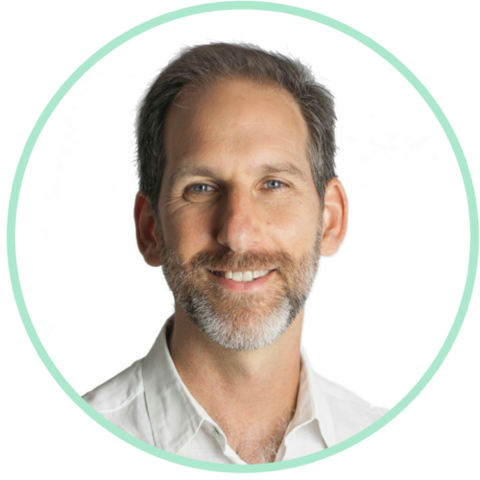
I trained first as an acupuncturist, graduating in 1999 from the International College of Oriental Medicine in Sussex, and kept training: Craniosacral Therapy at the Upledger Institute, Hypnosis with Dr John Butler, Mindfulness and Compassion training with the Mindfulness Association, voice work, and fooling and improvisational practice with Jonathan Kay, Keith Johnstone and Angela de Castro, among others. Many years of Neurosensory and Nervous-System work, Polyvagal theory and the Positive Intelligence framework. Long periods of study of Buddhism, Taoism and Kashmir Shaivism. And seven years of 1:1 Dreamwork training that is unlike anything else I've come across. I also spent some years as a member of something that can only be described as a cult, which taught me more about discernment — and about what to refuse — than anything I trained in.
There's a saying that usually gets cut short: "Jack of all trades, master of none." The full line ends "— oftentimes better than a master of one." That's the honest claim here. What I work with now isn't any one of those trainings; it's what they add up to when one person has lived them against each other for decades.
I live with my partner, who lives with chronic illness, and our seven-year-old cockapoo, Buttons.
If something here speaks to you — or you'd just like to ask a question — write to me.